Short answer
Standard 15 cm kami — thin, ~60 gsm, colored one side — is the best paper for almost everyone. Washi and chiyogami are for special folds; avoid construction paper and cardstock, which crack at the crease.
Paper decides more than skill does. The same crane folded from kami, printer paper and cardstock gives you a crisp bird, a pale stiff one, and a cracked mess — same hands, same folds. Here is what actually matters, and what to buy first.
What matters in origami paper
Three things: weight, crease memory, and size. Weight is measured in gsm — grams per square meter. Standard origami paper sits around 60–70 gsm, printer paper at 80, cardstock at 200 and up. Lighter paper folds through many layers without bulking; heavier paper holds a single bold crease but fights complex models. Crease memory is whether a fold stays folded — good paper snaps to its crease, bad paper breathes back open. Size is comfort: a 15 cm square suits most models, and anything cleverer than a crane is happier at 20 cm while you learn it.
Kami: the default, and the right one
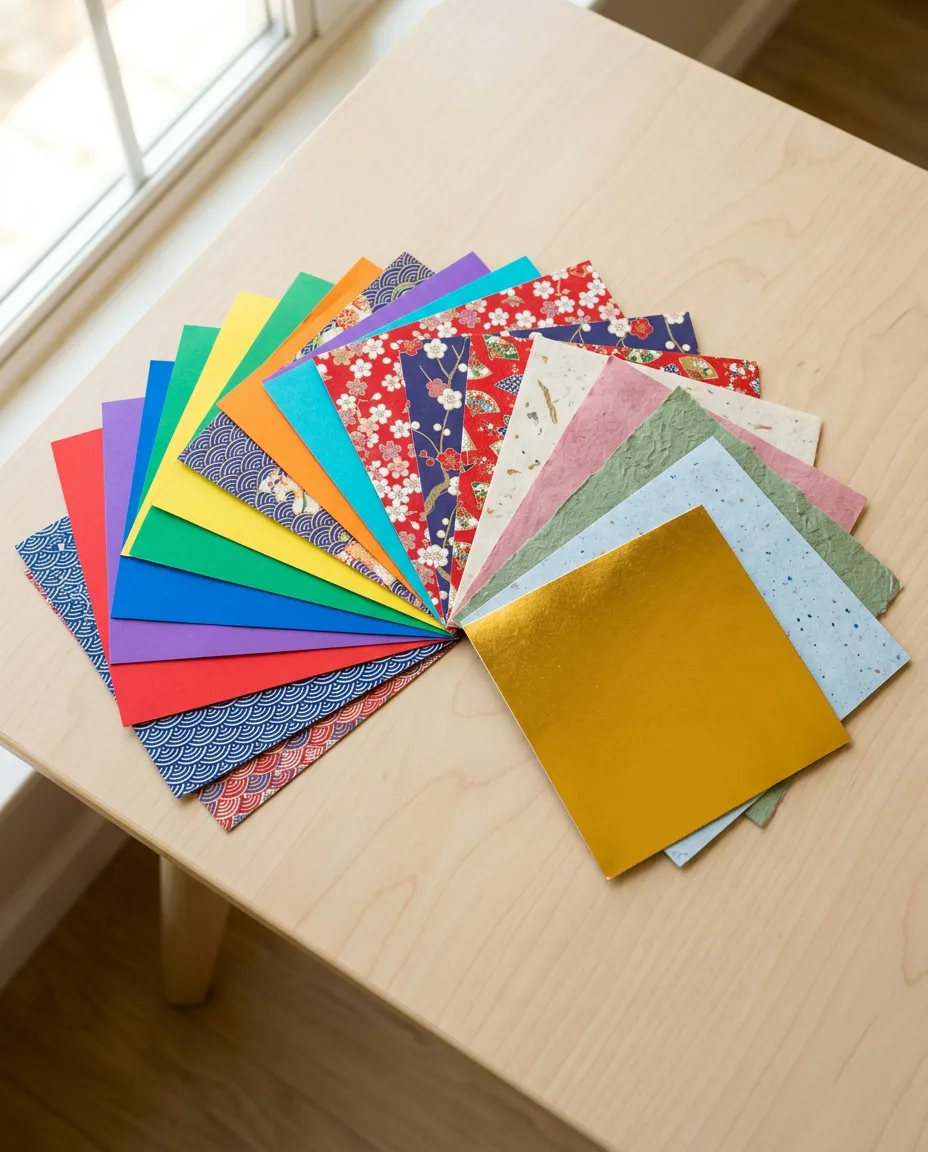
Kami just means paper in Japanese, and it is what those hundred-sheet rainbow packs are: thin, about 60 gsm, colored one side and white the other. It creases sharply, it is forgiving on re-folds, and the two-tone faces make diagram steps legible. One pack covers months of learning. If you buy nothing else, buy this.
When you want the fold to feel special
Washi is the soft, strong traditional paper — long fibers, a cloth-like hand, beautiful for simple models with few folds where the surface can speak. Chiyogami is washi or kami printed with traditional patterns; an envelope or a crane folded from it needs no further decorating. Duo paper carries a different color on each face, made for models that show both sides. Foil paper holds any crease ruthlessly, including every mistake — striking for stars, unforgiving for learning.
What about the paper already in the house?
Printer paper, cut square, folds everything up to intermediate just fine — it is how half of us learned. Newspaper and magazine pages are thin enough but tear along soft creases. Wrapping paper varies wildly; the thin matte kind is secretly good. Construction paper and cardstock are the two to refuse: both crack at the crease, and construction paper’s fuzz swallows sharp lines. For money folds, the bill itself is the paper — cotton-linen, nearly indestructible, happy to be refolded.
A sensible first shopping list
- One 100-sheet pack of 15 cm kami — the daily driver.
- Ten sheets of 20 cm paper for bigger or trickier models.
- A few sheets of chiyogami or washi for folds that will be gifts.
That is under twenty dollars and a year of folding. The exotic papers — tissue foil, elephant hide, double tissue — exist for complex and wet-folded work, and by the time you need them you will know exactly why.